Accelerometer, inclinometer or IMU: which motion sensor do you need?
DWIN Engineering, , 7 min read

An accelerometer measures linear acceleration, including gravity. An inclinometer (tilt sensor) uses gravity to report the tilt angle of something that is still or moving slowly. A gyroscope measures how fast it rotates. An IMU combines accelerometers and gyroscopes on three axes so it can track attitude while the platform moves.
Accelerometer
An accelerometer measures acceleration along one or more axes. At rest it reads gravity, 1 g pointing down; in motion it reads gravity plus the acceleration of the platform. Accelerometers are used for vibration and shock measurement, impact detection and as the raw input to tilt and attitude calculations.
Inclinometer (tilt sensor)
An inclinometer works out the angle between its axes and gravity and reports it as pitch and roll. It is accurate when the platform is still or moves slowly, such as a structure, a crane boom between moves, a solar tracker or a manhole cover. Vibration and acceleration disturb the reading, which is why inclinometers filter their output.
Gyroscope and vertical gyro
A gyroscope measures angular rate, how fast the platform is turning. Integrating that rate gives an angle that is not disturbed by acceleration but drifts slowly over time. A vertical gyro combines gyroscopes and accelerometers to report pitch and roll that stay steady on a moving vehicle or vessel.
IMU
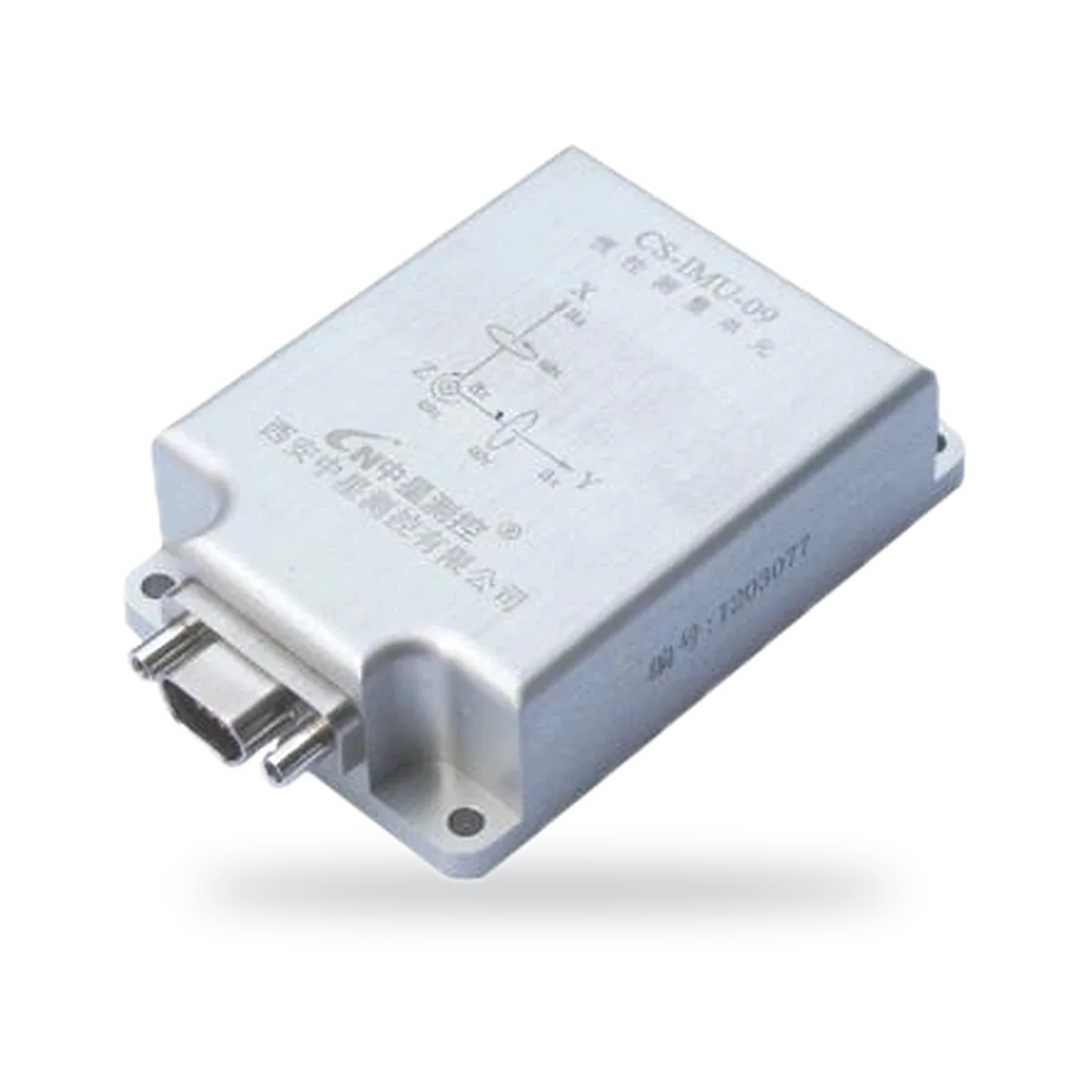
An inertial measurement unit packages accelerometers and gyroscopes on three axes, often with filtering that fuses them into attitude. It suits platforms in continuous motion: vehicles, agricultural machines, drones and stabilised equipment.
Choosing
| You need to know | Choose |
|---|---|
| Vibration, shock or impact | Accelerometer |
| Tilt of something still or slow | Inclinometer |
| Pitch and roll on a moving vehicle | Vertical gyro or IMU |
| Full attitude and motion | IMU |
| Tilt or movement at remote sites over a network | Wireless IoT tilt monitor |
Inclinometer vs accelerometer
Most inclinometers are built on MEMS accelerometers, so the difference is what comes out. An accelerometer reports acceleration in g, including vibration and shock; to get tilt you calculate it from the gravity component, angle = arcsin(a / g), and only while the sensor is still. An inclinometer does that calculation inside, filters vibration, compensates for temperature and outputs the angle in degrees.
Choose an accelerometer to measure vibration, shock or motion. Choose an inclinometer to measure tilt.
Inclinometer vs gyroscope
An inclinometer measures absolute angle against gravity but is disturbed when the platform accelerates. A gyroscope measures how fast the angle changes and ignores linear acceleration, but the angle it integrates drifts and has no absolute reference. For a structure or machine that tilts slowly, use an inclinometer; for a vehicle, ship or drone, use a vertical gyro or IMU that fuses both.
IMU vs accelerometer
An accelerometer measures linear acceleration on one to three axes. An IMU adds three gyroscopes, sometimes a magnetometer, and fuses them, so it follows orientation through turns and acceleration where an accelerometer alone would mistake motion for tilt. An IMU costs more and needs more processing; if you only need vibration or static tilt, an accelerometer or inclinometer is simpler.
How to choose an accelerometer
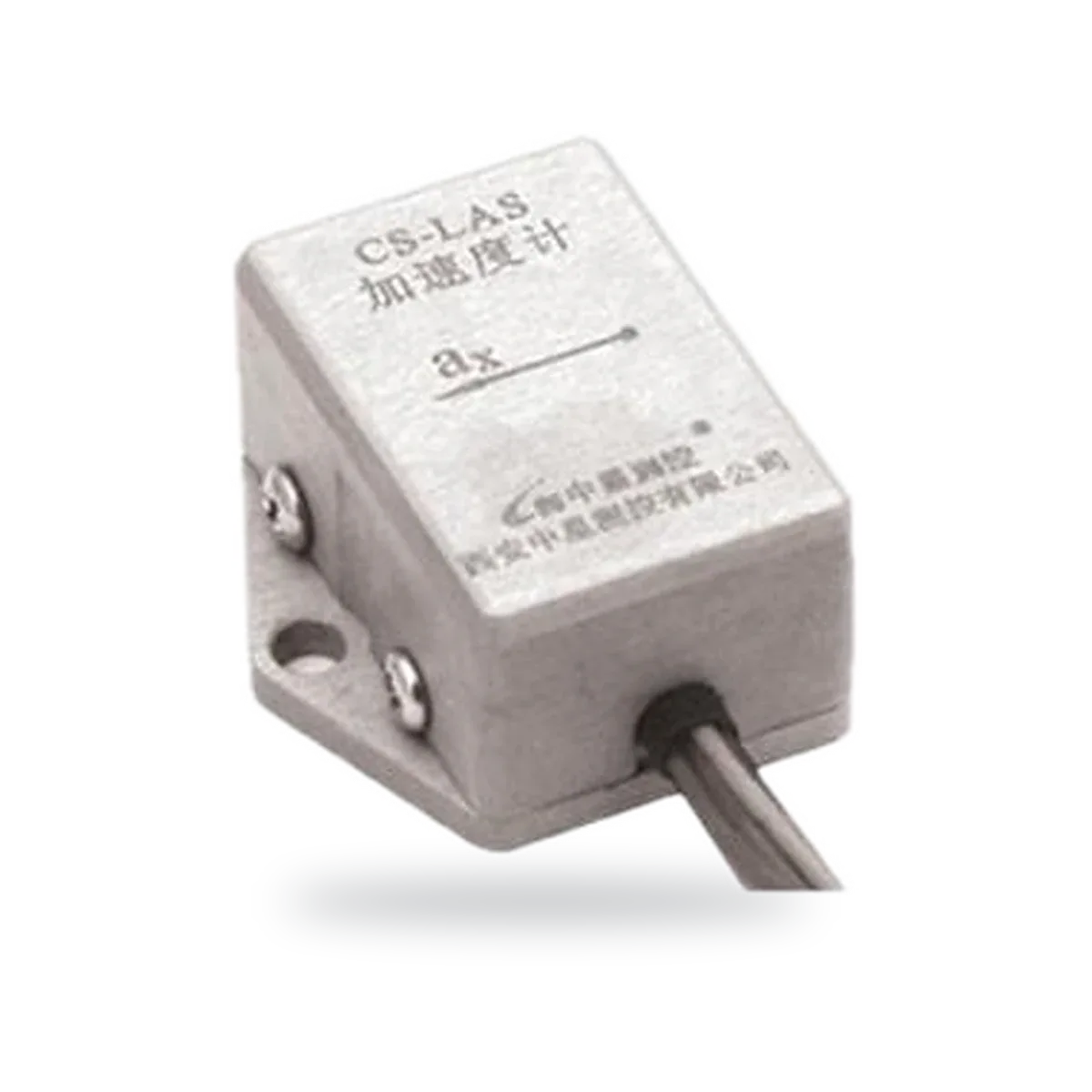
Six specifications decide the choice. DWIN's CS-LAS single-axis accelerometer, for example, is ±1 g as standard and selectable up to ±100 g, with a bandwidth of 50 Hz selectable up to 400 Hz and an analog voltage output.
- Range: the largest acceleration you must measure without clipping, from ±1 g for tilt to ±100 g or more for shock
- Sensitivity and noise: the smallest change you need to resolve
- Bandwidth: above the highest vibration frequency of interest; MEMS accelerometers also measure static (0 Hz) acceleration, which piezoelectric ones do not
- Axes: one, two or three
- Output: analog voltage for short cables, 4 to 20 mA or a digital bus for long runs
- Shock rating, temperature range and mounting for the environment
Frequently asked questions
What is a tilt sensor used for?
Tilt sensors, or inclinometers, measure the angle of something against gravity. They level machines and platforms, monitor cranes, booms and solar trackers, and watch structures, poles and manhole covers for movement. DWIN's CS-iTWGLM, for example, reports the tilt of a manhole cover over 0° to 180° by wireless network.
How accurate is an inclinometer?
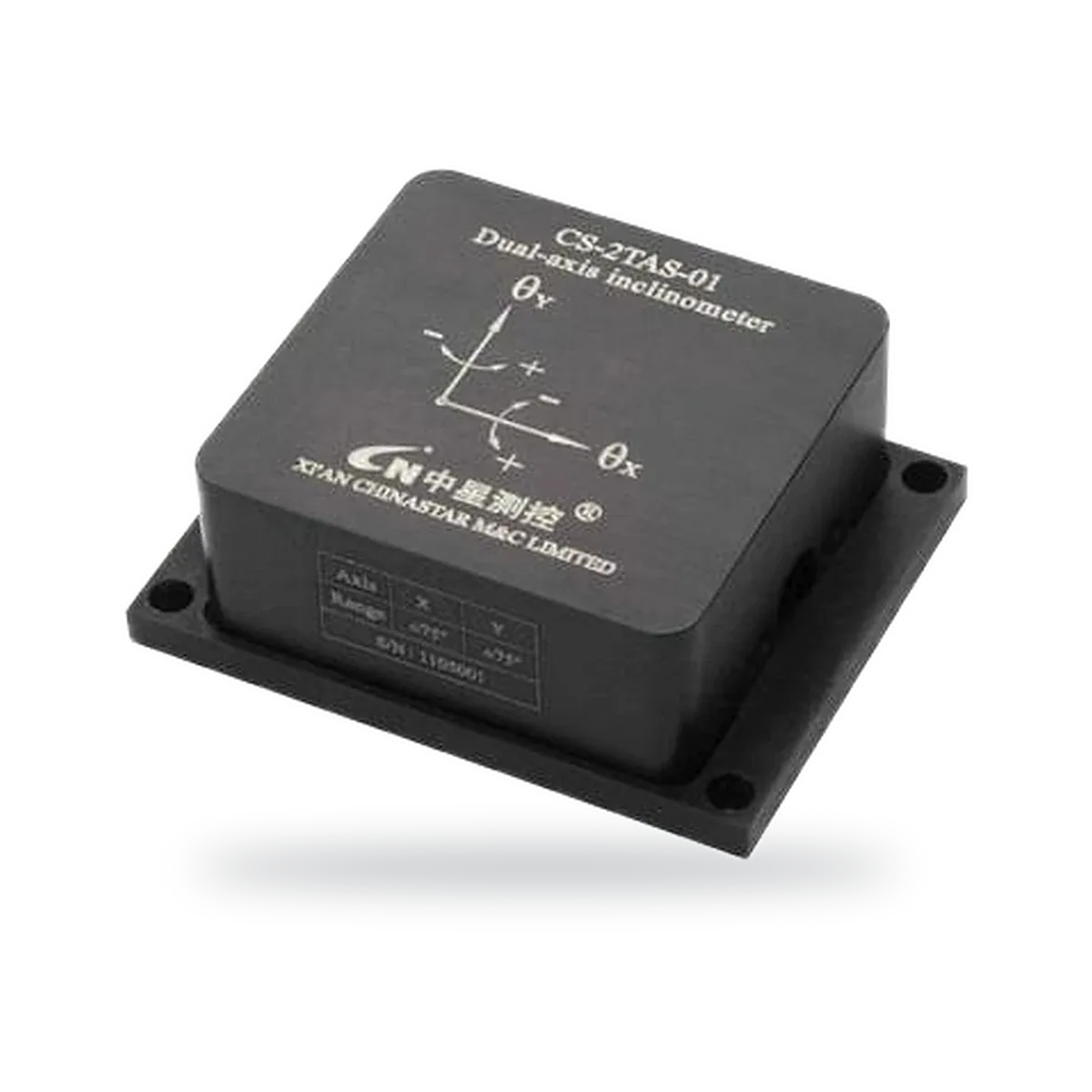
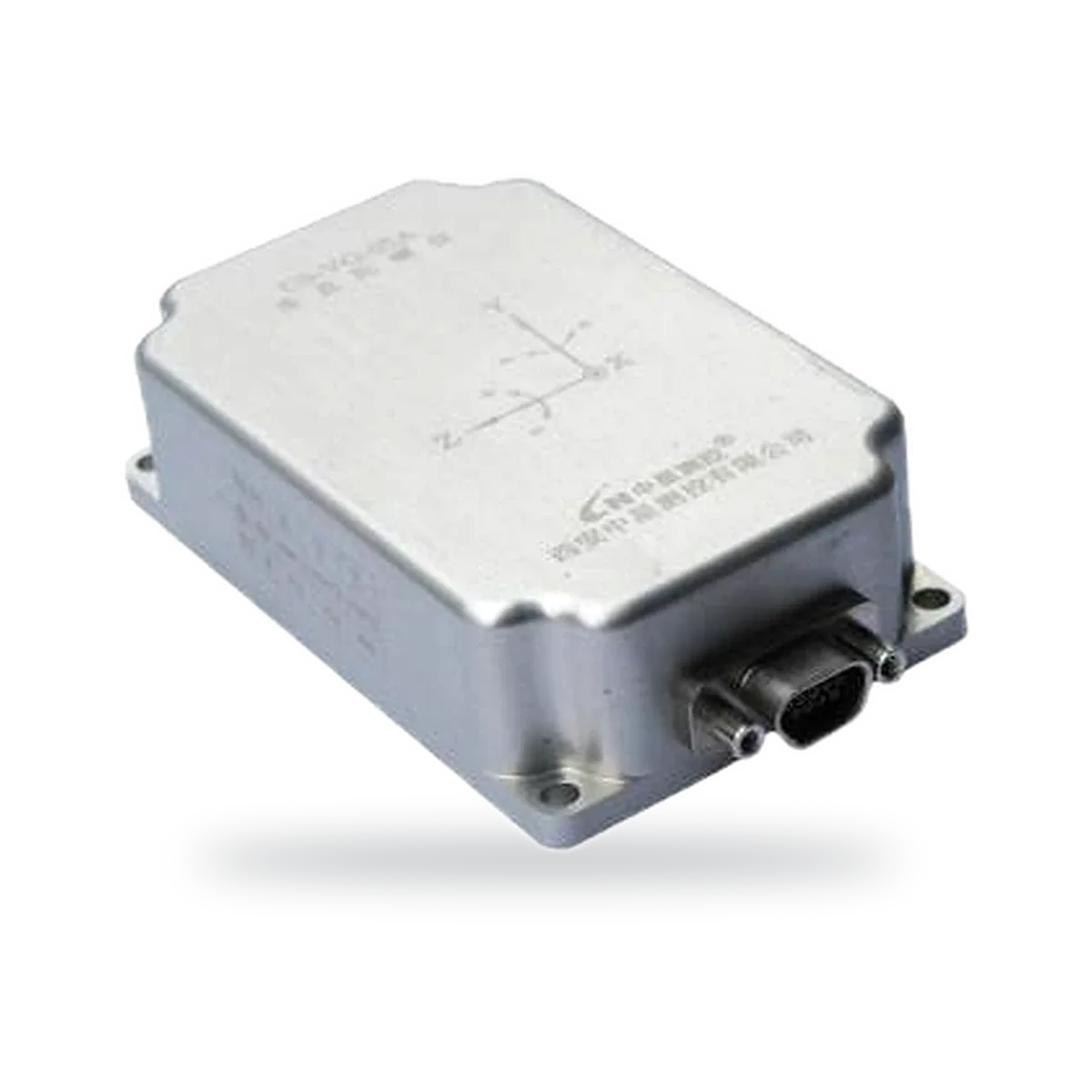
It varies widely with design and price. DWIN's CS-2TAS dual-axis inclinometer resolves 0.1° or better, the CS-VG-05 vertical gyro is accurate to better than 0.8° static and 2.5° RMS dynamic, and the CS-iTWGLM manhole monitor is ±2°. Temperature, vibration and mounting all affect real accuracy.
What is the difference between a 6-axis and a 9-axis IMU?
A 6-axis IMU has three accelerometers and three gyroscopes. A 9-axis IMU adds a three-axis magnetometer, which gives a heading reference so that yaw does not drift, as long as there are no strong magnetic disturbances nearby. Pitch and roll come from the accelerometers and gyroscopes in both.