How do mmWave radar sensors work? 24 GHz vs 60 GHz vs 77 GHz
DWIN Engineering, , 7 min read
A millimeter-wave (mmWave) radar sensor transmits a chirp whose frequency rises steadily, mixes the echo with the signal it is sending, and reads distance from the frequency difference, speed from the Doppler shift and angle from the phase across several antennas. Higher bands allow wider sweeps: 77 to 81 GHz radar can sweep 4 GHz, giving a range resolution of about 4 cm, against about 60 cm in the 250 MHz-wide 24 GHz band.
What is mmWave radar?
Millimeter waves are radio waves from about 30 to 300 GHz, with wavelengths of 1 to 10 mm. At 79 GHz the wavelength is about 3.8 mm; at 24 GHz, about 12.5 mm. The sensors called mmWave radar today mostly work at 24 GHz (strictly just below the millimeter band), 60 GHz or 77 to 81 GHz.
Short wavelengths mean small antennas: an array that forms a useful beam fits on a circuit board a few centimeters across. Radar is not affected by darkness, glare, the color of the target, or most rain, fog and dust, and it measures speed directly.
How does FMCW radar measure distance?
Most mmWave sensors use frequency-modulated continuous wave (FMCW) radar. The transmitter sends a chirp: a signal whose frequency rises linearly over a sweep bandwidth B in a time T. The echo from a target at distance R comes back after a delay of 2R/c, so at any moment it is at a slightly lower frequency than the signal being sent.
Mixing the received signal with the transmitted one gives a beat frequency proportional to distance: f(beat) = (B/T) × 2R/c. A fast Fourier transform separates targets at different distances into different beat frequencies.
Why bandwidth sets range resolution
Range resolution is the smallest gap at which two targets appear as two: ΔR = c / 2B. It depends only on the sweep bandwidth, not on the carrier frequency.
With 250 MHz, the width of the 24 GHz ISM band, ΔR is 60 cm. With 1 GHz it is 15 cm, and with 4 GHz, available from 77 to 81 GHz, it is 3.75 cm. DWIN's 79 GHz door-opening radar sweeps 4 GHz and its datasheet gives a range resolution of 0.043 m, close to that limit.
Resolution is not the same as accuracy. A single target can be located much more finely than ΔR: the same radar is specified at ±0.04 m range accuracy.
How radar measures speed and angle
A moving target shifts the phase of the echo from one chirp to the next: the Doppler effect, with a frequency shift of 2v/λ. A second Fourier transform across a series of chirps gives the radial speed of every target. The shorter the wavelength, the larger the shift for the same speed, so higher bands resolve speed better for the same observation time.
Angle comes from the small difference in the echo's phase at several receive antennas a fraction of a wavelength apart. More antennas, or virtual antennas formed by several transmitters (MIMO), give finer angle resolution.
24 GHz vs 60 GHz vs 77 GHz
| Band | Frequencies | Usable sweep | Range resolution | Typical uses |
|---|---|---|---|---|
| 24 GHz ISM | 24.0–24.25 GHz | 250 MHz | 60 cm | Motion and presence detection, speed sensing, parking space detection |
| 60 GHz | Around 57–64 GHz, varies by region | Several GHz | A few cm | Indoor presence, in-cabin occupant detection, gesture sensing |
| 77 GHz | 76–77 GHz | 1 GHz | 15 cm | Long-range forward radar, adaptive cruise control |
| 79 GHz | 77–81 GHz | Up to 4 GHz | 3.75 cm | Short-range corner radar: blind spot, door opening, parking |
Which band for which job?
24 GHz radar is mature and low cost, and its 250 MHz band is enough to tell whether something is present and how fast it moves. The older wide-band 24 GHz allocation for vehicle radar is being phased out in many regions, which is why new automotive designs move to 77 to 81 GHz.
60 GHz is license-exempt in many countries with several gigahertz of bandwidth. Oxygen in the air absorbs strongly around 60 GHz, which limits long-range use but matters little indoors and inside a vehicle cabin.
77 to 81 GHz is the automotive radar band. The narrower 76 to 77 GHz part serves long-range forward radar; the 4 GHz from 77 to 81 GHz gives the fine resolution that short-range sensors around a vehicle need.
Automotive uses: blind spot and door-opening warning
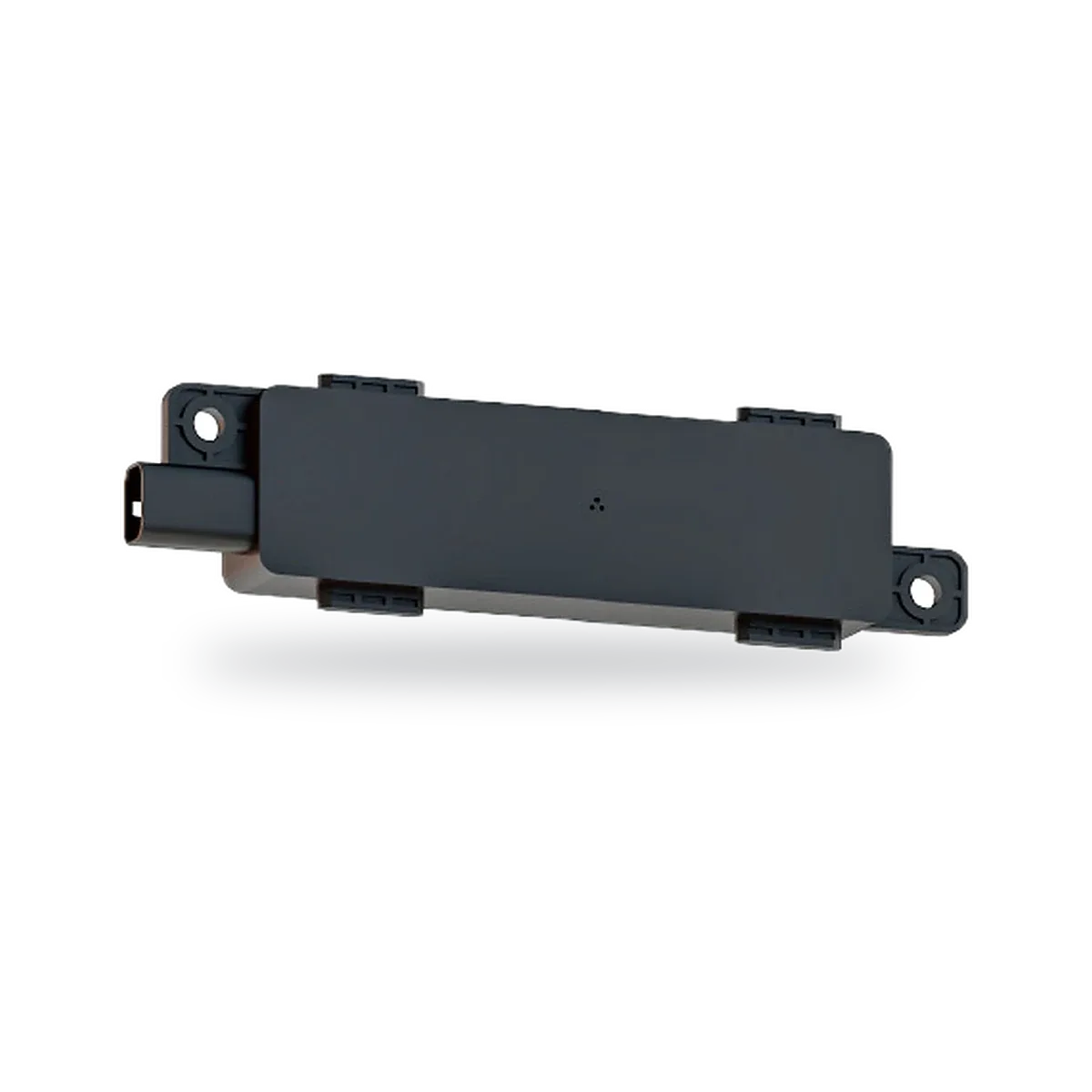
Blind spot detection radars in the rear corners watch the adjacent lanes and warn the driver when a vehicle is in the zone the mirrors miss. DWIN's side blind zone microwave radar is built for vehicle blind zone detection, with long-distance detection and resistance to interference.
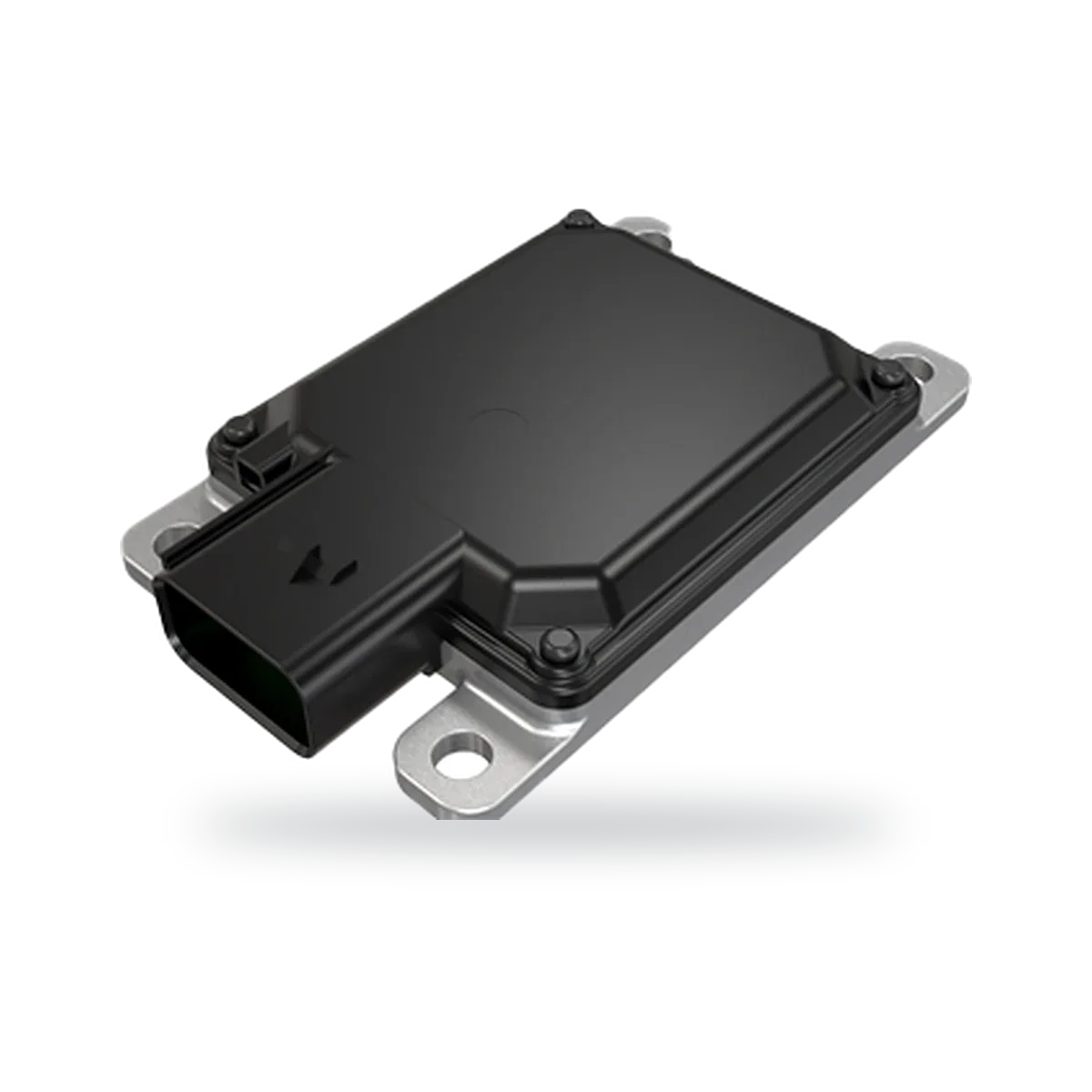
Door-opening warning watches for cyclists, scooters and cars approaching from behind as a door is about to open. DWIN's 79 GHz door-opening obstacle avoidance radar works from 77 to 81 GHz with FMCW and a 4 GHz sweep, covers 0.04 to 4 m with a 150° by 150° field of view, measures speed from −12.2 to +12.2 m/s, and reports lateral and longitudinal distance, velocity and height every 50 ms. It runs on 9 to 16 VDC at 2 W or less and weighs 22 g.
Parking space detection
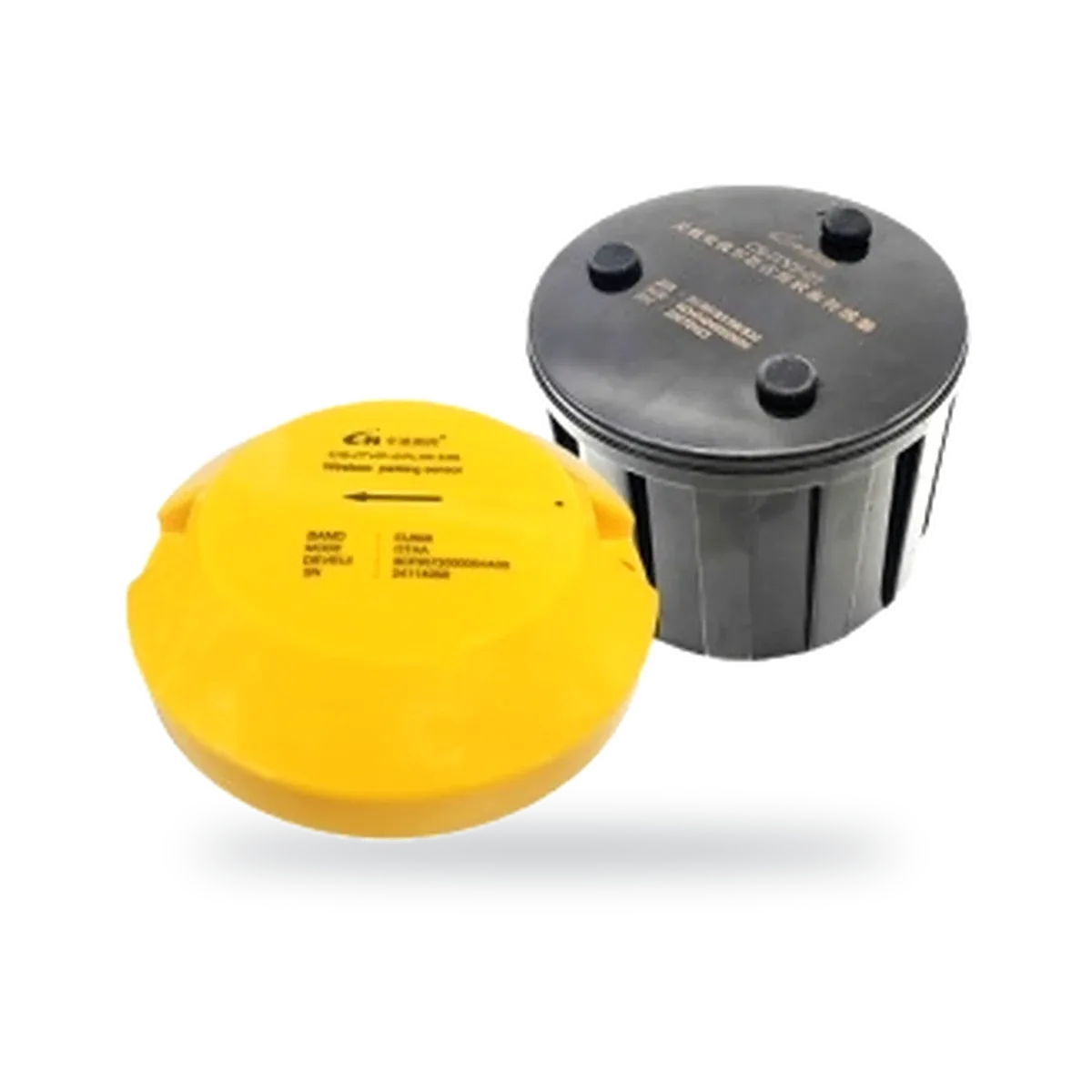
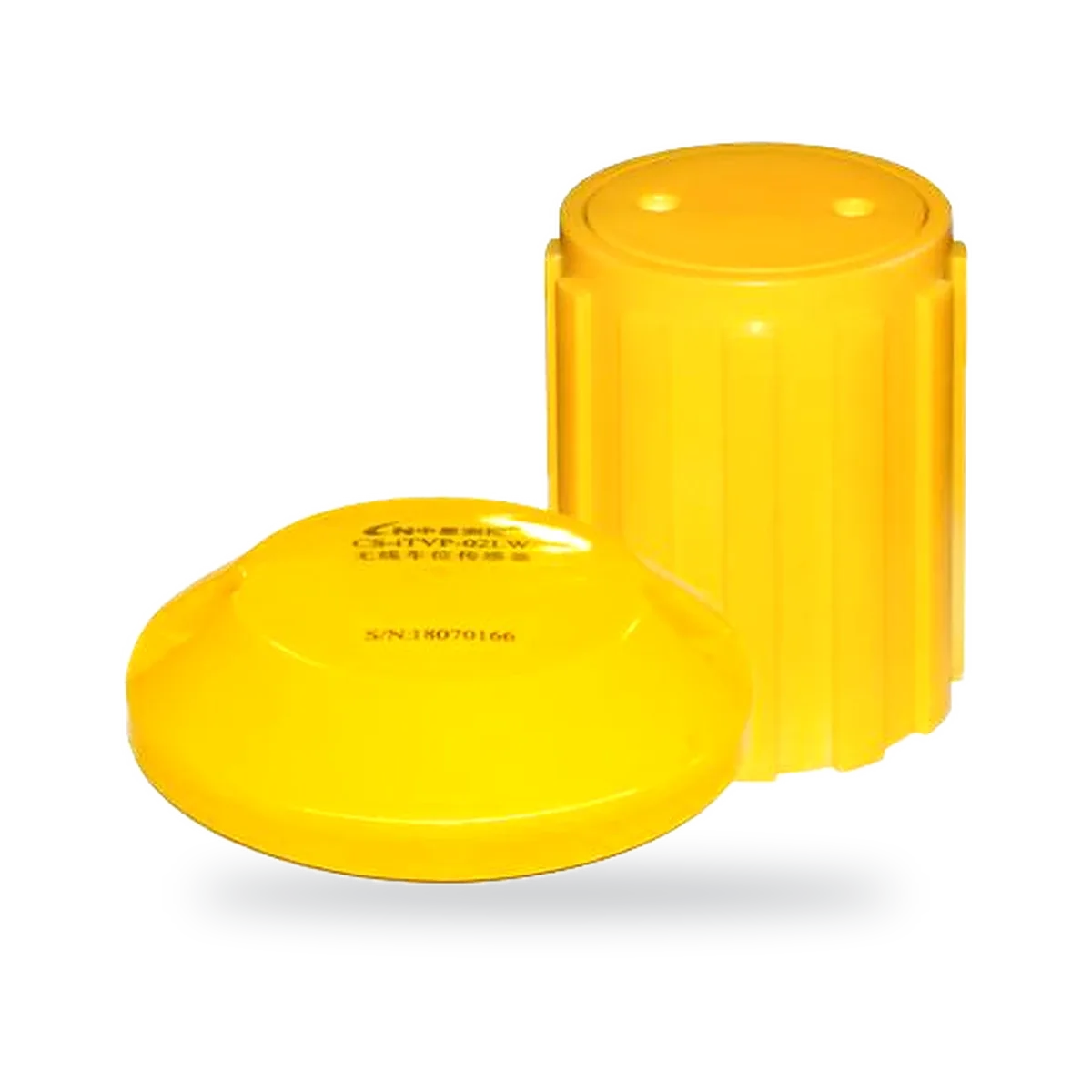
Street and parking-lot sensors have to tell a parked car from passing traffic, snow or a person standing over them. A magnetic sensor detects the steel of a vehicle; radar confirms that an object is above the sensor. DWIN's CS-iTVP-07 combines anisotropic magnetoresistive sensing with 24 GHz radar for an integrated detection accuracy of at least 97%, a detection height of 0.2 to 1.2 m, LoRaWAN or NB-IoT reporting, IP68 and a battery life of more than 5 years under typical conditions.
Frequently asked questions
What is a mmWave radar sensor?
A mmWave radar sensor is a compact radar working at millimeter wavelengths, usually in the 24, 60 or 77 to 81 GHz bands. It measures the distance, speed and angle of objects from their radio echoes. Because it does not rely on light, it works in darkness, glare, rain, fog and dust.
What is 77 GHz radar used for?
77 GHz radar is the main band for automotive radar. The 76 to 77 GHz range serves long-range forward radar such as adaptive cruise control, while 77 to 81 GHz, often called 79 GHz radar, serves short-range sensors for blind spot detection, door-opening warning and parking. DWIN's 79 GHz door-opening radar works from 77 to 81 GHz.
Is 77 GHz radar better than 24 GHz?
For automotive sensing, usually yes: 77 to 81 GHz allows up to 4 GHz of sweep bandwidth, which gives about 4 cm range resolution against about 60 cm in the 24 GHz ISM band, and smaller antennas. 24 GHz remains a good, lower-cost choice for presence, motion and parking space detection, where fine resolution is not needed.
What is FMCW radar?
FMCW (frequency-modulated continuous wave) radar transmits a signal whose frequency sweeps linearly, then mixes the echo with the transmitted signal. The resulting beat frequency is proportional to distance, and changes across successive sweeps give speed. Most mmWave radar sensors use FMCW.
Can mmWave radar see through walls?
Millimeter waves pass through thin plastic, fabric, glass and bumper covers, which is why radar can be hidden behind a vehicle bumper or a plastic housing. Concrete, brick, metal and water absorb or reflect them strongly, so mmWave radar does not see through building walls in any useful way.
Does rain affect mmWave radar?
Light and moderate rain, fog and dust have little effect, which is a main reason radar is used outdoors and on vehicles. Very heavy rain attenuates the signal and shortens range somewhat, and a film of water, ice or mud on the radome can weaken detection, so the cover should be kept clean.