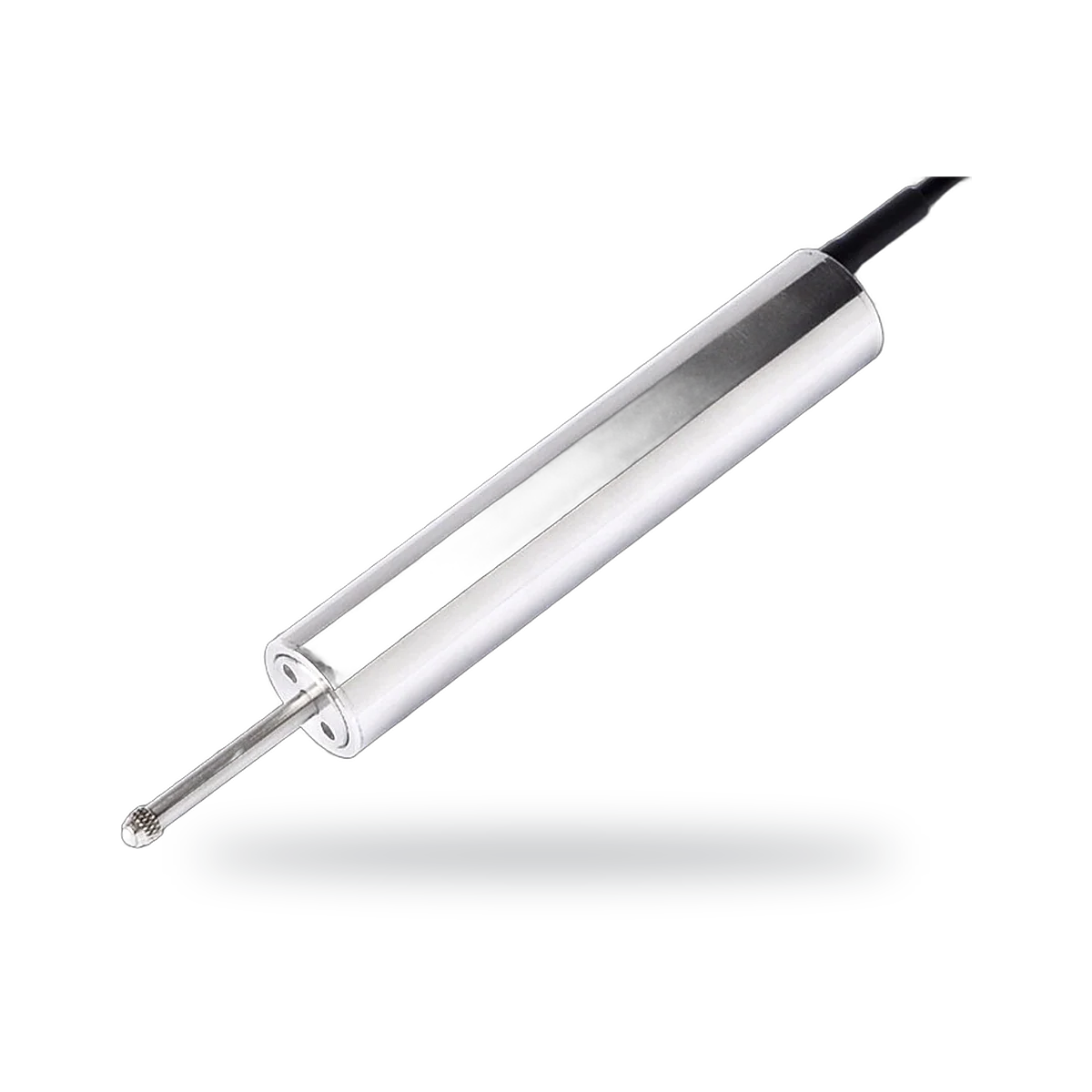
DW-LVDT
Spring-Return LVDT Displacement Sensor, Ø20 mm, 2.5 to 100 mm
Spring-return LVDT displacement sensor in a Ø20 mm 304 stainless steel housing with built-in demodulator, ranges from 2.5 to 100 mm and 0–5 V, 0–10 V, 4–20 mA or RS485 output from a single DC supply.
- Range
- 2.5–100 mm
- Output
- 0–5 V, 0–10 V, 4–20 mA or RS485
- Resolution
- ≤0.1 µm
Features
- Ø20 mm 304 stainless steel housing with spring-return guided plunger
- Single DC supply with built-in signal demodulator
- 0–5 V or 0–10 V (3-wire), 4–20 mA (2-wire) or RS485 output
- Ranges from 2.5 to 100 mm with high resolution and repeatability
- No sliding contacts, long service life
- Hard, wear-resistant stainless steel probe tip
Typical applications
Full specifications
PDF DW-LVDT Datasheet| Performance | |
|---|---|
| Measuring range | 2.5 / 5 / 10 / 15 / 25 / 50 / 100 mm |
| Non-linearity | Analog: ±0.25% or ±0.5% (1%, 3% and 5% classes also listed); RS485: 0.25% or 0.1% |
| Resolution | ≤0.1 µm; 16-bit (RS485 output) |
| Temperature coefficient | Zero ≤0.01%/°C; sensitivity ≤0.025%/°C |
| Output | |
| Output signal | 0–5 V (9–12 V DC supply); 0–10 V or 4–20 mA 2-wire (15–28 V DC); RS485 (9–12 V DC); ±5 V, ±10 V or AC output to order |
| Communication protocol | Modbus RTU or ASCII |
| Baud rate | 2400–115200 (default 9600) |
| Load resistance | 500 Ω recommended at 24 V DC (4–20 mA) |
| Electrical | |
| Supply voltage | 9–28 V DC, single supply |
| Operating current | ≤12 mA (voltage output); 4–20 mA loop current (2-wire version) |
| Mechanical | |
| Housing material | 304 stainless steel, Ø20 mm (other diameters on request) |
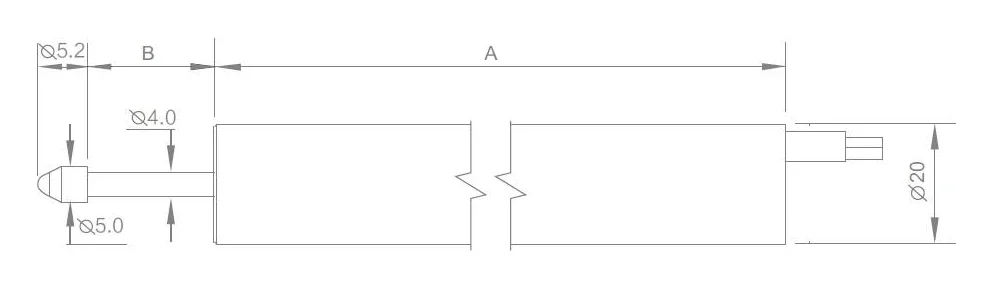
| Probe diameter | Ø4.0 mm plunger, Ø5.0 mm ball tip |
| Body length | 106 / 116 / 136 / 156 / 196 / 236 / 346 mm for 2.5 / 5 / 10 / 15 / 25 / 50 / 100 mm (+62 mm with RS485) |
| Plunger extension | 5 / 8 / 15 / 22 / 34 / 60 / 115 mm for 2.5 to 100 mm range |
| Electrical connection | Straight cable outlet or aviation connector |
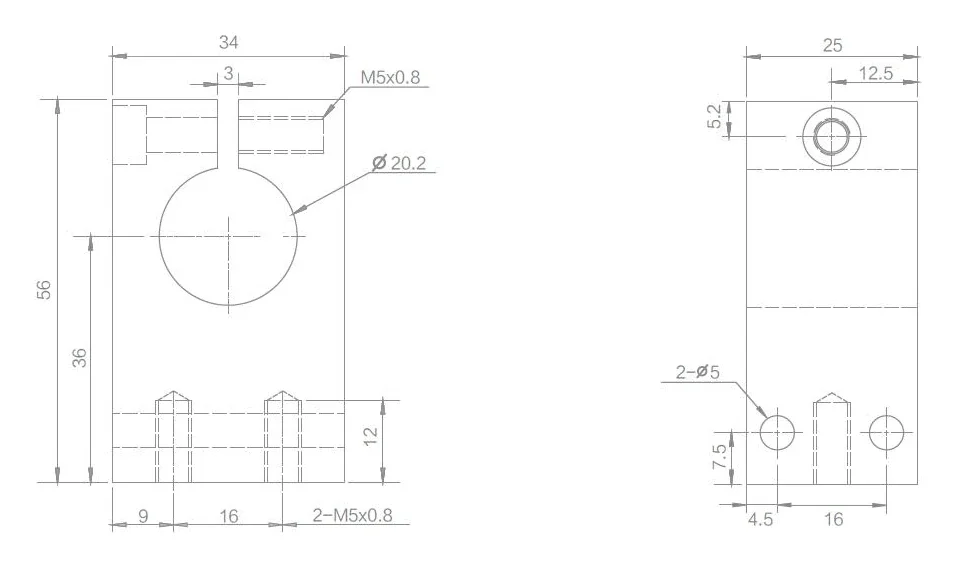
| Installation method | Clamp mounting; clamp accessory 34 × 56 × 25 mm, Ø20.2 mm bore |
| Environmental | |
| Operating temperature | −25 to +85 °C |
Dimensions and wiring
Questions about the DW-LVDT
What is the measuring range of the DW-LVDT?
The DW-LVDT (Spring-Return LVDT Displacement Sensor) has a measuring range of 2.5–100 mm.
What output signal or interface does the DW-LVDT use?
The output of the DW-LVDT (Spring-Return LVDT Displacement Sensor) is 0–5 V, 0–10 V, 4–20 mA or RS485.
What supply voltage does the DW-LVDT need?
The DW-LVDT (Spring-Return LVDT Displacement Sensor) is powered by 9–28 V DC, single supply.
What is the resolution of the DW-LVDT?
The DW-LVDT (Spring-Return LVDT Displacement Sensor) is specified with a resolution of ≤0.1 µm.
What is the DW-LVDT used for?
The DW-LVDT (Spring-Return LVDT Displacement Sensor) is typically used for shaft runout measurement, hydraulic cylinder positioning, valve position detection and control, roll gap measurement, and brake wear measurement on vehicles.
Where can I get the DW-LVDT datasheet?
The DW-LVDT datasheet is a free PDF on this page, with the full specification table. For drawings in CAD format or a custom version, contact DWIN sales.
Does DWIN offer OEM or custom versions of the DW-LVDT?
Yes. DWIN adapts the DW-LVDT from its existing design: housing and mounting, cable and connector, interface and protocol, firmware and range. Engineering confirms feasibility, then DWIN builds samples for your tests before series production.
How do I get a quote or samples of the DW-LVDT?
Use the quote form on this page or email xyx@gzdwin.com with the DW-LVDT, your quantity, application and destination country. DWIN sales replies with pricing, lead time and sample availability.