Pressure switch vs pressure transmitter: which one do you need?
DWIN Engineering, , 5 min read
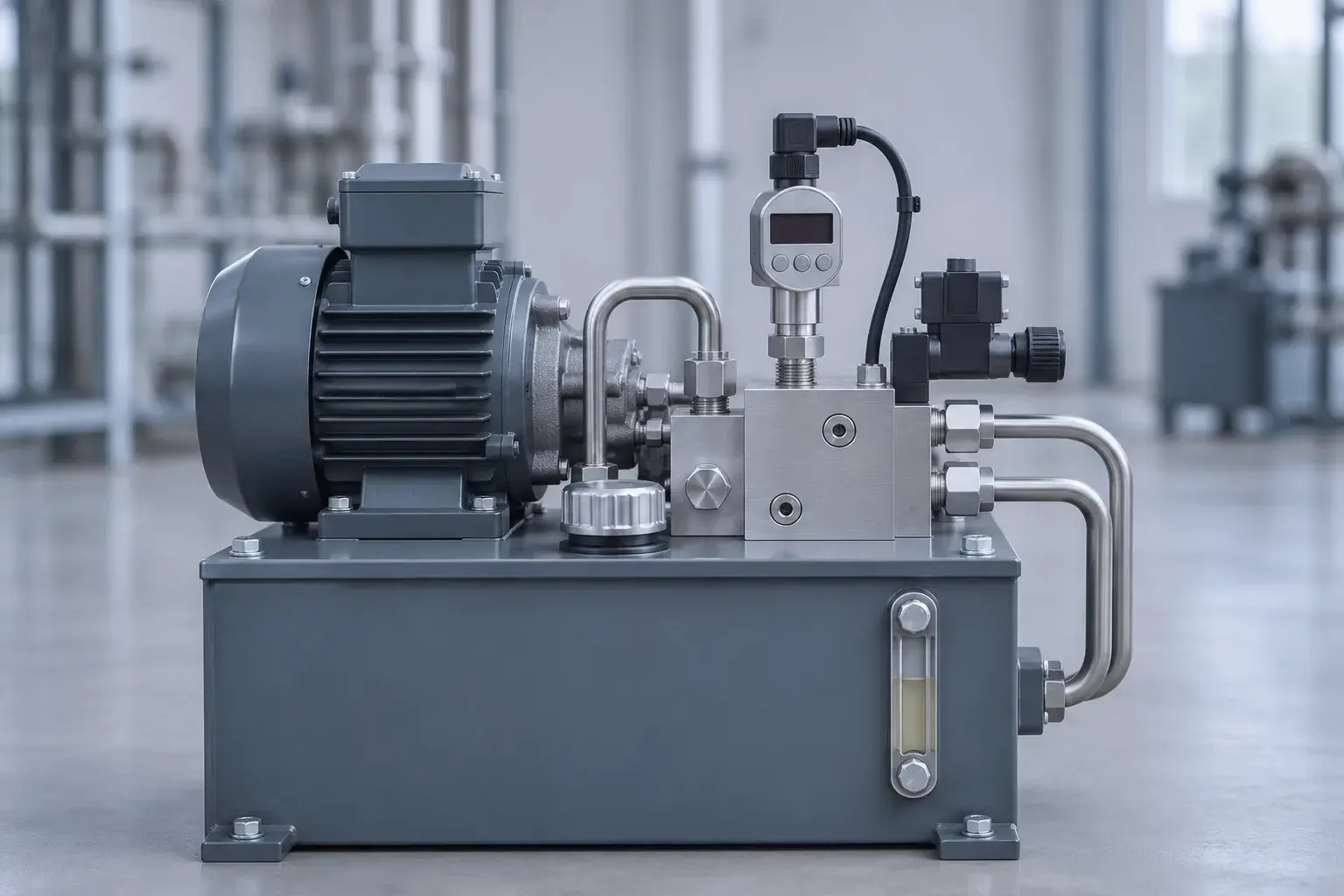
Use a pressure switch when a machine only needs to know whether pressure is above or below a limit, for example to start a pump or raise an alarm. Use a pressure transmitter when the controller needs the actual pressure value as a continuous signal such as 4 to 20 mA. Electronic pressure switches often combine both: switch outputs plus an analog output and a display.
What a pressure switch does
A pressure switch compares the process pressure with a set point and changes the state of an output when the pressure crosses it. The reset point, a little below or above the set point, keeps the output from chattering when pressure hovers near the limit; the gap between the two is the hysteresis.
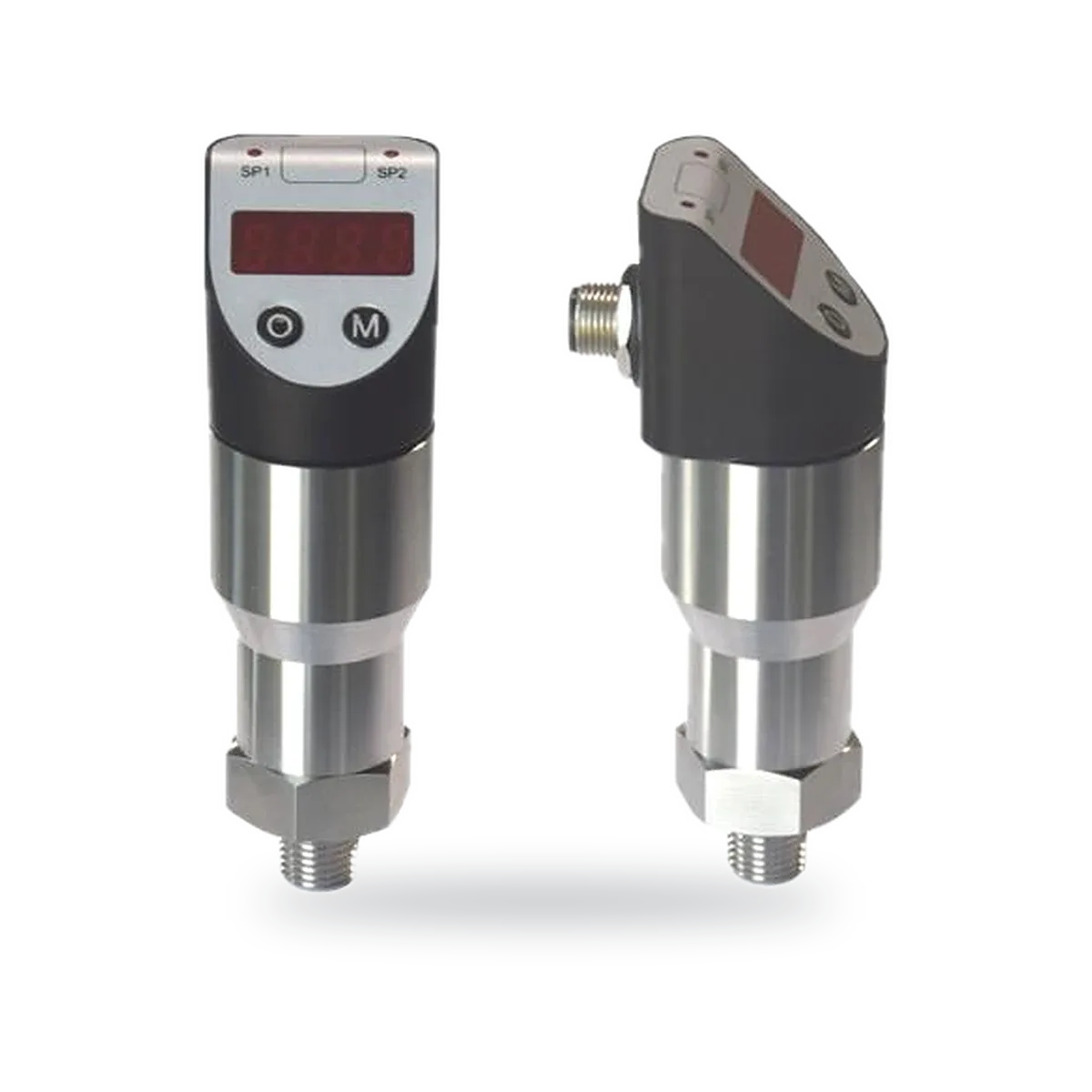
Mechanical switches use a diaphragm or piston that moves a contact. Electronic pressure switches measure pressure with a sensing element, then switch a relay or a transistor output (PNP or NPN). They usually let you set the switch point and hysteresis on a display, and many add a delay to ignore short spikes.
What a pressure transmitter does
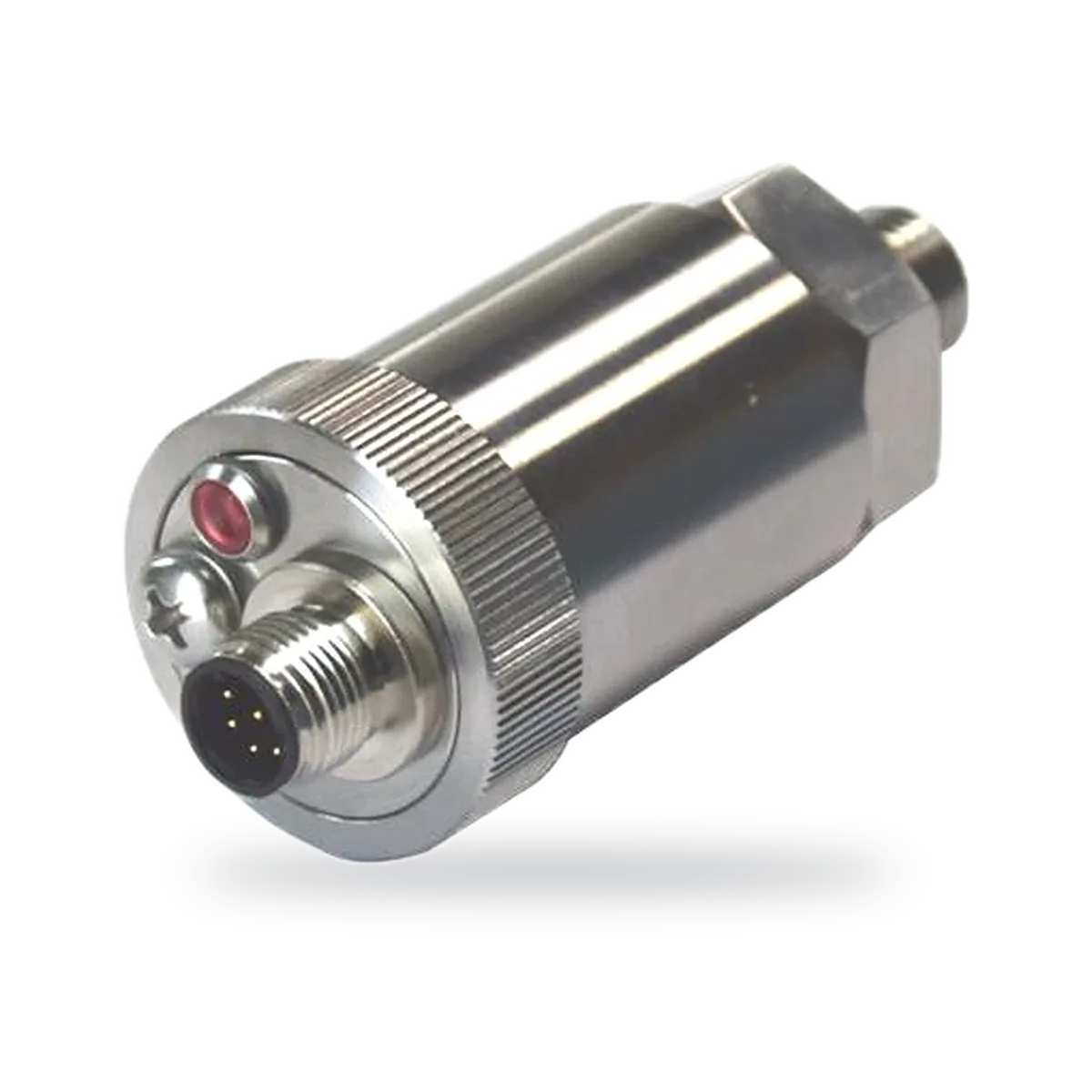
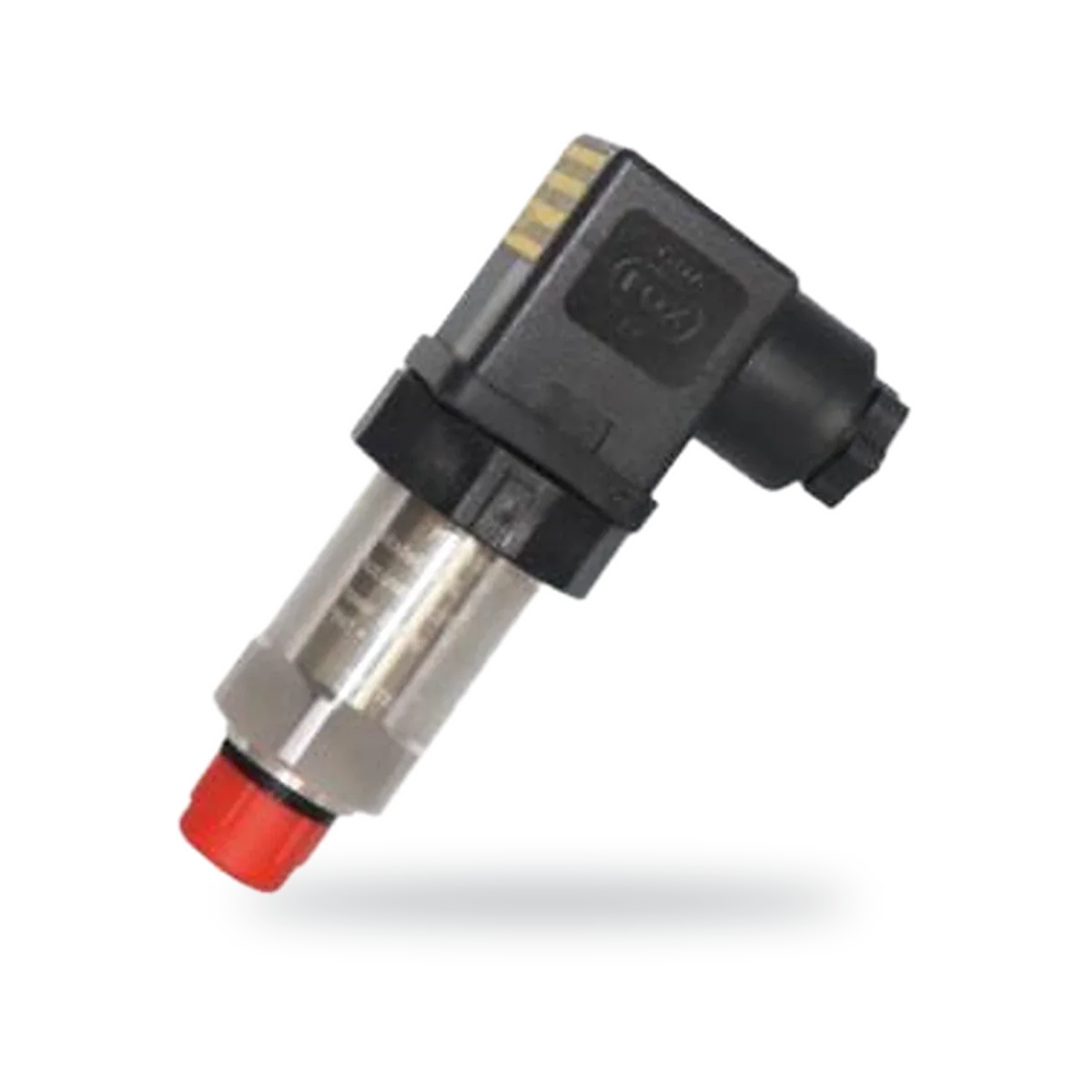
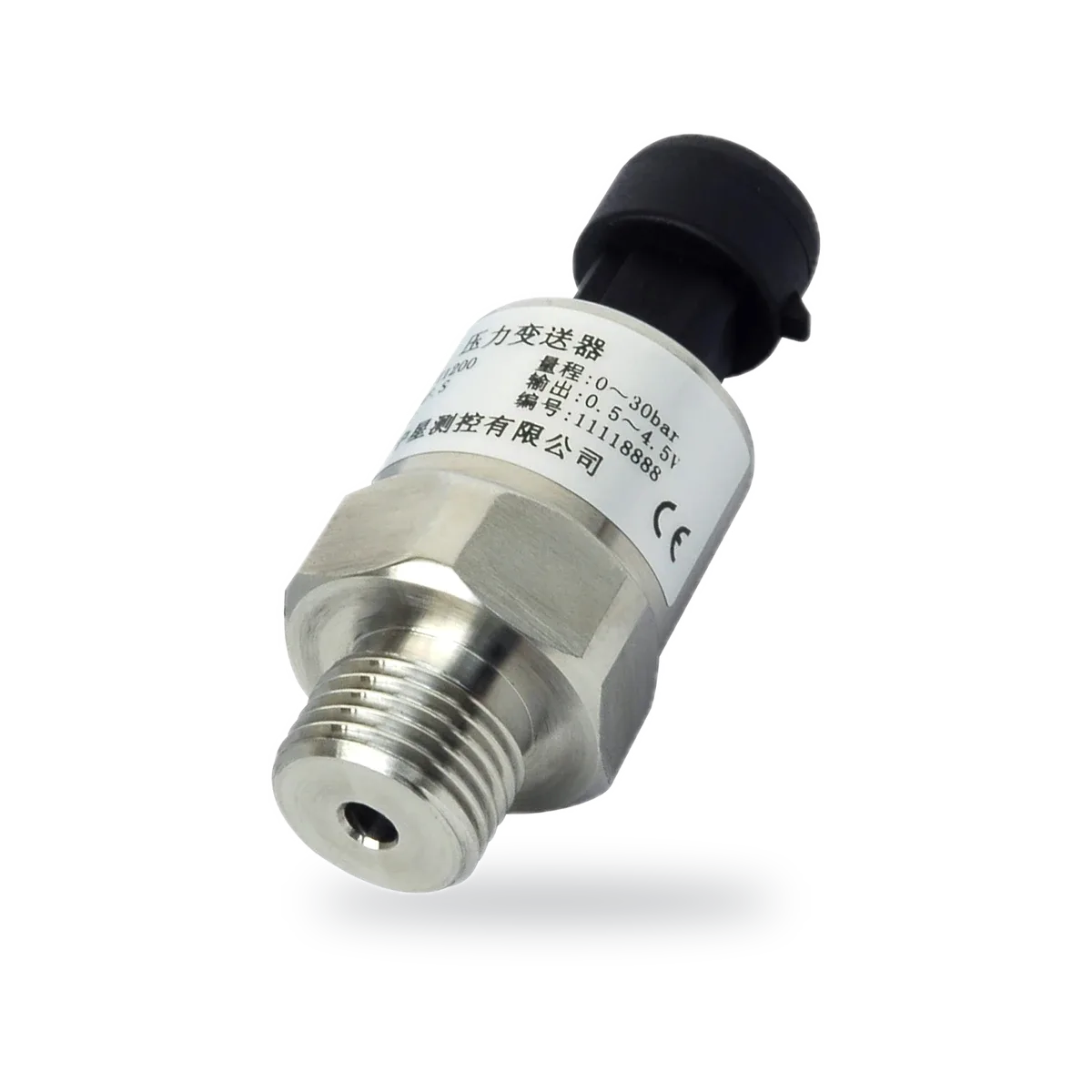
A pressure transmitter converts pressure into a calibrated, continuous signal: a current loop (4 to 20 mA), a voltage (0 to 10 V or 0.5 to 4.5 V ratiometric) or a digital value over RS485 or I²C. The controller sees every change in pressure, not just a threshold, so it can regulate, log and trend it.
Side by side
| Pressure switch | Pressure transmitter | |
|---|---|---|
| Output | On or off at a set point | Continuous value across the range |
| Typical job | Pump start and stop, low or high pressure alarm, interlock | Closed-loop control, monitoring, data logging |
| What you set | Switch point, reset point or hysteresis, delay | Range, sometimes zero and span |
| Wiring | Relay contacts or PNP/NPN transistor outputs | 2-wire 4 to 20 mA loop, 3-wire voltage, or a bus |
| Information sent | Above or below the limit | The actual pressure |
When one device does both
Electronic pressure switches with a display often provide one or two switch outputs and an analog output at the same time. The machine gets a hard-wired limit for safety and the control system still receives the pressure value. If a design needs both, one combined device saves a port, a cable and a mounting point.
How to choose
- Only a limit matters, and no controller reads the value: pressure switch
- The value is needed for control, display or records: pressure transmitter
- A safety limit plus monitoring: electronic pressure switch with analog output
- Check the output type your controller or relay accepts, the pressure range and overload, the process connection and the ingress rating
Frequently asked questions
Can a pressure transmitter be used as a pressure switch?
Yes, if the controller compares its 4 to 20 mA or digital value with a limit and switches an output. That gives fully adjustable limits from one sensor. Where a safety limit must act even if the controller fails, a separate hard-wired pressure switch is still the usual choice.
What is a pressure switch used for?
Pressure switches start and stop pumps and compressors, raise alarms on low or high pressure, and act as interlocks that stop a machine when pressure is outside safe limits. Typical places are water booster sets, air compressors, hydraulic units and lubrication systems.
What is the difference between a pressure switch and a pressure sensor?
A pressure sensor measures pressure and reports its value. A pressure switch only reports whether the pressure is above or below a set point by opening or closing a contact. An electronic pressure switch contains a pressure sensor, and some, such as DWIN's CS-PT623, also output the value as 4 to 20 mA.