Ceramic vs diffused silicon vs sputtered thin film: pressure sensor technologies compared
DWIN Engineering, , 8 min read

Ceramic pressure sensors are low cost and corrosion resistant but rely on an elastomer seal and are more sensitive to pressure spikes. Diffused silicon sensors behind an oil-filled steel diaphragm cover the widest span, from very low to very high ranges. Sputtered thin-film sensors are fully welded steel with high overload and burst ratings, for hydraulics and high pressure.
What decides the technology?
Every pressure sensor turns the deflection of a diaphragm into an electrical signal. What differs is the diaphragm material, how the strain or deflection is read, and what separates the sensing element from the medium. Those three choices set the media the sensor tolerates, its overload and burst margins, its lowest and highest ranges, and its cost.
Most of these sensors use a Wheatstone bridge of four resistors that change value as the diaphragm bends: two in tension, two in compression. The bridge gives a few millivolts per volt of excitation, which the transmitter electronics amplify, compensate for temperature and convert to 4 to 20 mA, a voltage or a digital output.
Ceramic piezoresistive (thick film)
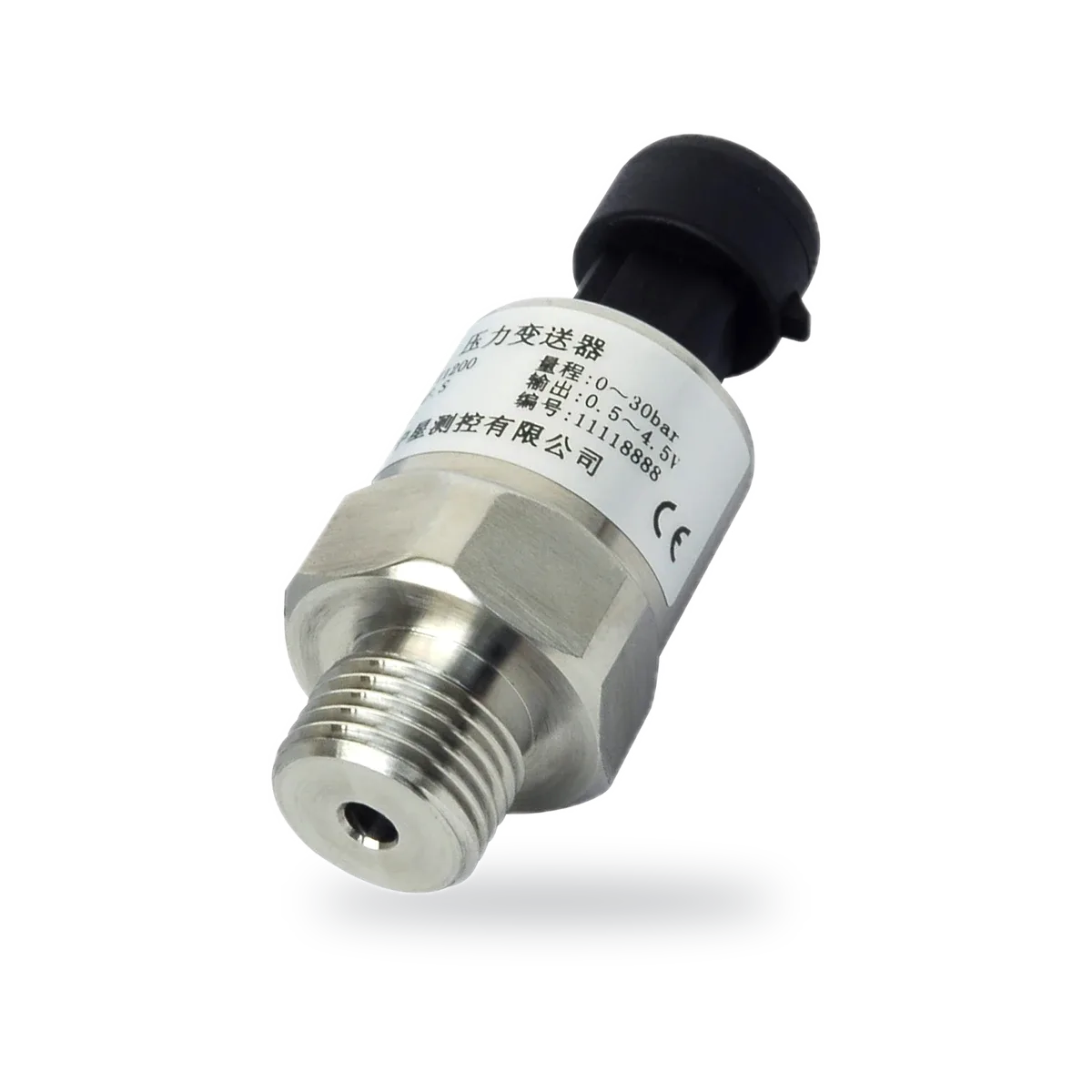
A ceramic disc, usually alumina, forms the diaphragm, with thick-film resistors printed and fired onto its back. The medium touches the ceramic directly, and an O-ring seals the sensor into the port. Alumina resists water and many corrosive liquids, and the construction suits volume production at low cost.
Ceramic is strong but brittle, so overload and burst margins are moderate and sharp pressure spikes are a risk; DWIN's CS-PT1100W-1 has an anti-water-hammer design for that reason. The O-ring material (NBR, FKM, CR) must suit the medium and temperature. DWIN's ceramic piezoresistive transmitters include the CS-PT1100 series (0–5 to 0–50 bar), the CS-PT1200 (to 0–50 bar) and CS-PT1200 high-pressure version (0–50 to 0–600 bar), and the CS-PT1200R for refrigerants.
Ceramic capacitive
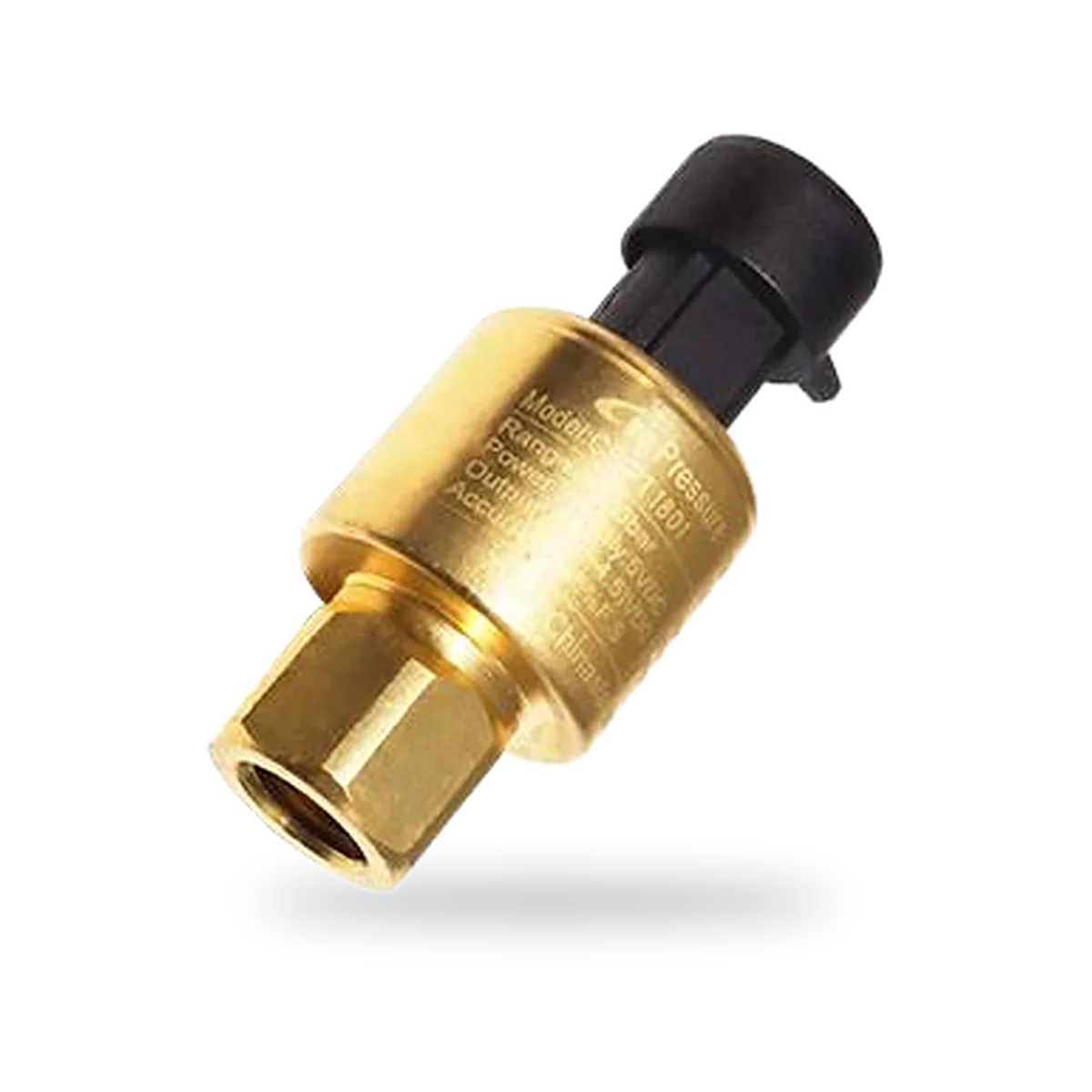
A ceramic diaphragm and a ceramic base each carry an electrode, forming a capacitor. Pressure bends the diaphragm, changing the gap and the capacitance. The diaphragm can bottom out on the base without breaking, which gives a high overload rating for its range, and capacitive cells are known for good linearity and small temperature drift.
DWIN's CS-PT1800 (0.5 to 4.5 V ratiometric) and CS-PT1801 (4 to 20 mA) use a ceramic capacitive cell for refrigerant circuits from −1 to 50 bar, with 200% FS overload and 300% FS burst pressure, IP67 and an anti-condensation design.
Diffused silicon (piezoresistive, oil filled)
A silicon chip with piezoresistors diffused into it is the sensing element. Silicon is very sensitive, so the same technology covers both very low and very high ranges. The chip cannot touch most media, so it sits in a chamber of silicone oil sealed by a thin stainless steel isolation diaphragm, usually 316L; the oil passes the pressure through to the chip.
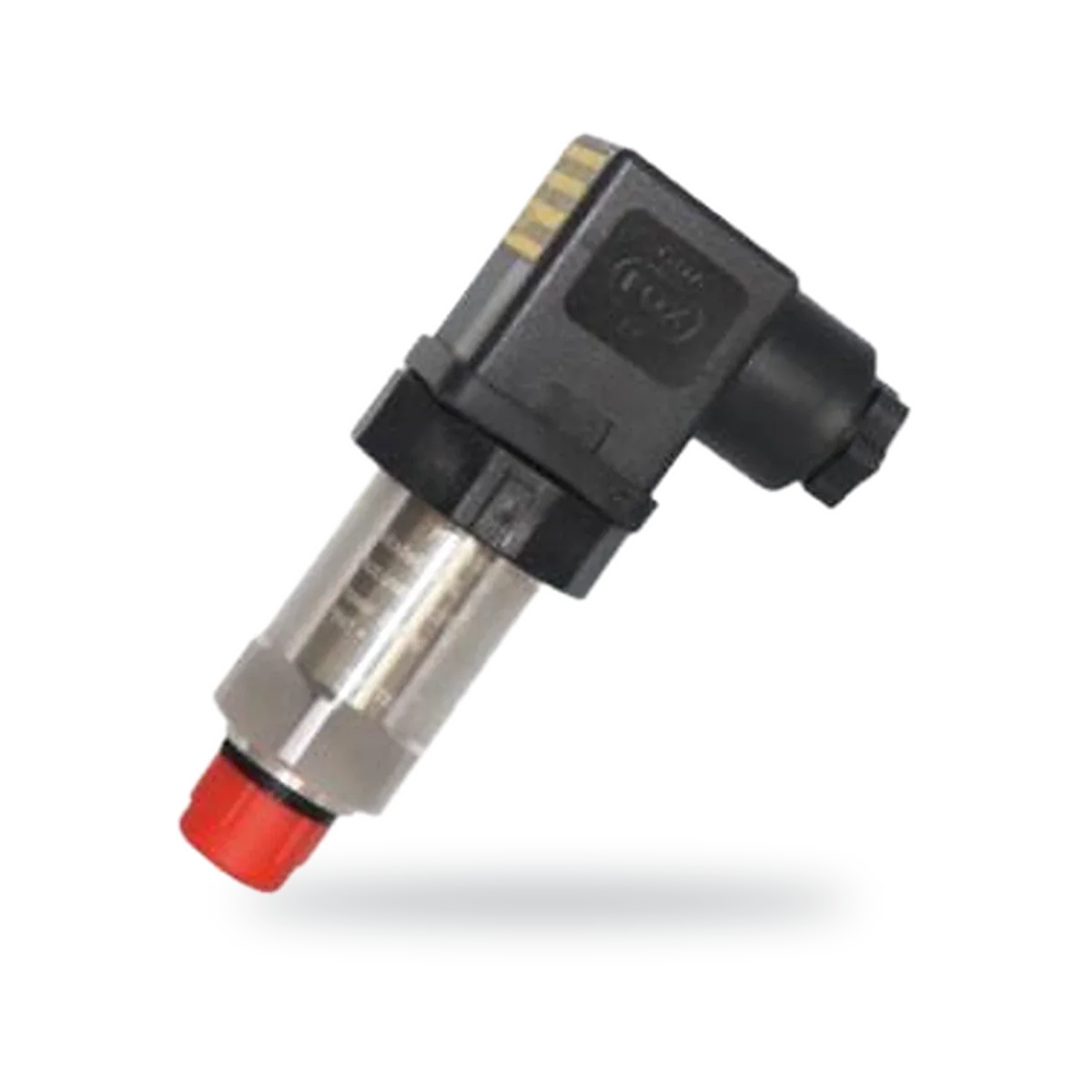
Silicon is strongly temperature dependent, so these transmitters need careful compensation. DWIN's CS-PT300S covers 0–0.07 bar to 0–1,000 bar, the CS-PT300F has a flush diaphragm for viscous media and easy cleaning, and the welded CS-PT300G and CS-PT300M refrigerant transmitters have no O-rings, with 300% FS overload. The submersible level and differential pressure transmitters (CS-PT400, CS-PT500) use the same principle.
Sputtered thin film
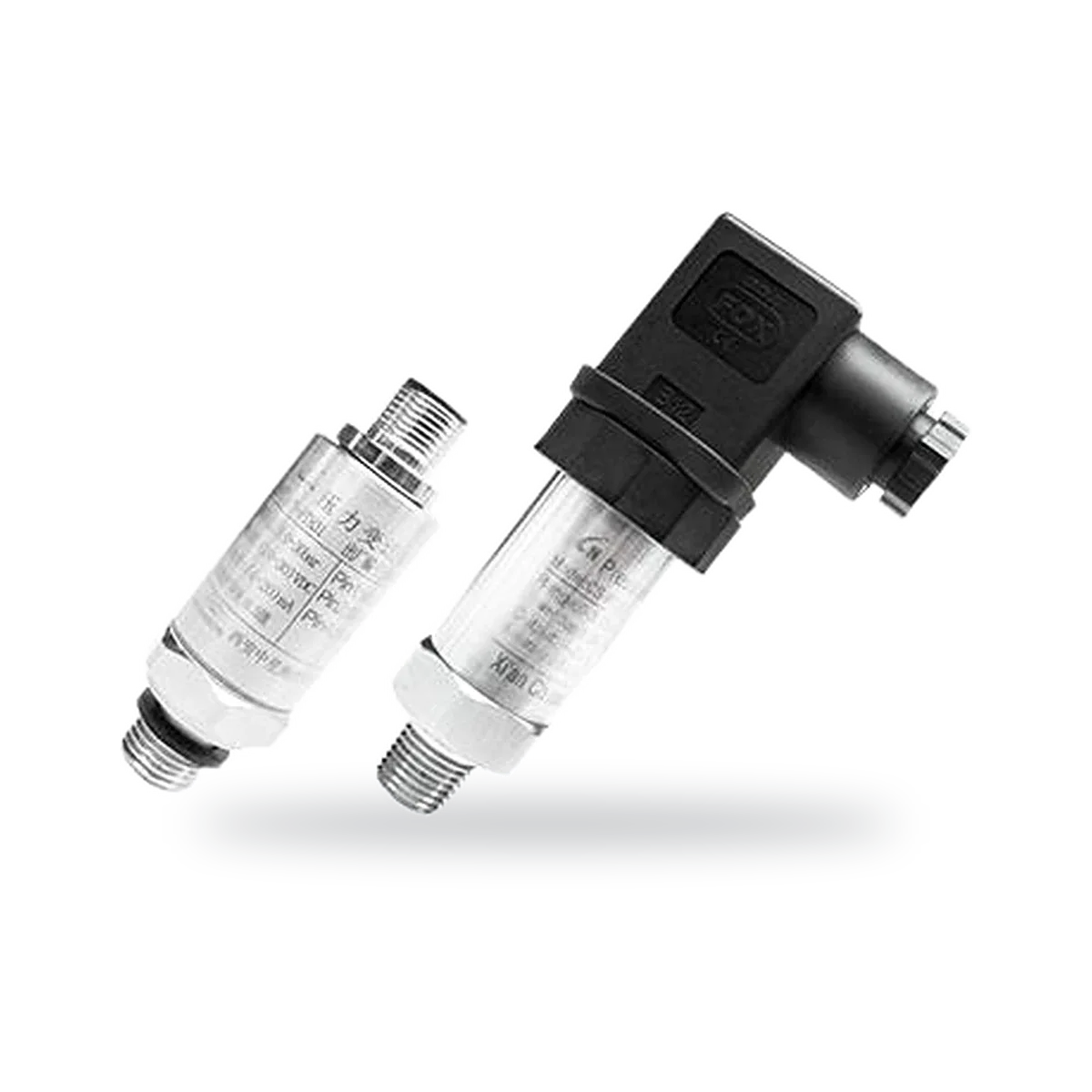
An insulating layer and a strain-gauge bridge are deposited by sputtering, atom by atom in a vacuum, directly onto a stainless steel diaphragm. There is no glue, no oil and, because the sensor is welded into the port, no O-ring. The bond is stable, tolerates vibration and temperature cycling, and the thick steel diaphragm gives high overload and burst ratings.
Thin-film sensors are generally used for higher ranges and cost more than ceramic. DWIN's CS-PT831 covers 0–25 to 0–800 bar with 2× overload and 10× burst pressure (up to 2,000 bar), the CS-PT830 reaches 0–40 MPa with ≥200% FS overload, and the CS-PT807 covers 0–2 to 0–40 MPa with a 0.2 to 4.8 V output.
MCS metal pressure element
DWIN's MCS (Metal Coalesce System) element is a one-piece metal sensing element carrying a bridge output. The MCS19 element covers 0–0.5 to 0–50 MPa in gauge, absolute or sealed gauge form, outputs 1.5 to 2 mV/V, has a burst pressure of at least 20 times its range, is rated for 10^8 pressure cycles and is compatible with media that 17-4PH stainless steel tolerates.
The GU27 transmitter is built on an MCS element for 0–2.5 to 0–50 MPa with accuracy down to ±0.1% FS, including a grade specified over −40 to 85 °C, and RS485, 1 to 5 V or 4 to 20 mA output in a fully welded, IP67 housing.
DWIN models by sensing technology
| Technology | DWIN models | Ranges | Overload / burst (as specified) | Wetted parts | Typical use |
|---|---|---|---|---|---|
| Ceramic piezoresistive | CS-PT1100A/B/V/W, CS-PT1100W-1, CS-PT1109, CS-PT1200, CS-PT1200A, CS-PT1200R, CS-PT1350 | 0–5 to 0–600 bar | ≥150% / ≥200% FS on most; CS-PT1200R 3× / 7× | Ceramic, O-ring, steel or brass port | Water, air, HVAC, compressors, CO2 (CS-PT1350) |
| Ceramic capacitive | CS-PT1800, CS-PT1801 | −1 to 50 bar | 200% / 300% FS | Ceramic, neoprene seal, brass or copper | Refrigerant circuits |
| Diffused silicon, oil filled | CS-PT300S, CS-PT300F, CS-PT300G, CS-PT300M | 0–0.07 to 0–1,000 bar | ≥150% FS (CS-PT300S); 300% / 500% FS (CS-PT300G/M) | 316L diaphragm, welded or O-ring sealed | Low ranges, process, flush mounting, refrigerants |
| Sputtered thin film | CS-PT807, CS-PT830, CS-PT831 | 0–2 MPa to 0–800 bar | Up to 2× / 10× FS (CS-PT831) | 316L, fully welded | Hydraulics, high pressure, gases |
| MCS metal element | MCS19 element, GU27 transmitter | 0–0.5 to 0–50 MPa | Burst ≥20× (MCS19); 1.5× / 3–10× (GU27) | Metal, fully welded | High accuracy, OEM sensor builds |
How to choose
- Water, air and cost-sensitive OEM volumes up to 50 bar: ceramic piezoresistive
- Refrigerants where condensation and overload matter: ceramic capacitive or welded silicon
- Very low ranges, below about 1 bar: diffused silicon
- Viscous, dirty or hygienic media: a flush diaphragm such as the CS-PT300F
- Hydraulics, pressure spikes and ranges of hundreds of bar: sputtered thin film
- Highest accuracy over temperature: an MCS-based transmitter such as the GU27
- Always check the seal material against the medium, or choose a fully welded design with no O-ring
Frequently asked questions
What are the main types of pressure sensor?
Industrial pressure sensors are mostly ceramic (piezoresistive thick film or capacitive), diffused silicon in an oil-filled steel cell, sputtered thin film on a steel diaphragm, or bonded metal elements. They differ in which materials touch the medium, how much overload they survive and which ranges they cover. All of them turn diaphragm deflection into an electrical signal.
Are ceramic pressure sensors any good?
Yes, for the right job. Ceramic sensors resist corrosion, are stable and cost less, which is why they are common in water, HVAC and compressor applications up to a few hundred bar. Their limits are a moderate burst margin, sensitivity to sharp pressure spikes, and the elastomer seal, which must suit the medium.
What is a diffused silicon pressure sensor?
It is a silicon chip with piezoresistors diffused into its surface, mounted in silicone oil behind a stainless steel isolation diaphragm. The oil transfers pressure from the diaphragm to the chip. The technology is very sensitive, so it covers low ranges well, and DWIN's CS-PT300S spans 0–0.07 bar to 0–1,000 bar.
Why choose a sputtered thin-film pressure sensor?
Thin-film sensors are fully welded steel with no oil fill and no O-ring, so there is nothing to leak and they tolerate vibration, temperature cycling and pressure spikes. They have high overload and burst ratings: DWIN's CS-PT831 is rated at 2× overload and 10× burst pressure, up to 2,000 bar. They usually cost more than ceramic sensors.
What is the difference between a pressure sensor and a pressure transducer?
The terms overlap. Strictly, the sensor or sensing element is the part that responds to pressure, such as a ceramic cell or an MCS19 element with a millivolt bridge output. A transducer or transmitter adds the electronics and housing that turn that into a conditioned output such as 0.5 to 4.5 V or 4 to 20 mA.